
What Is Virtual Staging? Meaning, Benefits and Disclosure Rules
Updated October 19, 2026 · 7 min read
Virtual staging (also called digital staging) is adding furniture and decor to a photo of an empty room, digitally, so buyers and renters can picture how the space could look. Nothing is brought into the home: only the listing photo changes. When a listing says a photo is “virtually staged,” it means the furniture you see was added to the photo and isn’t in the property.
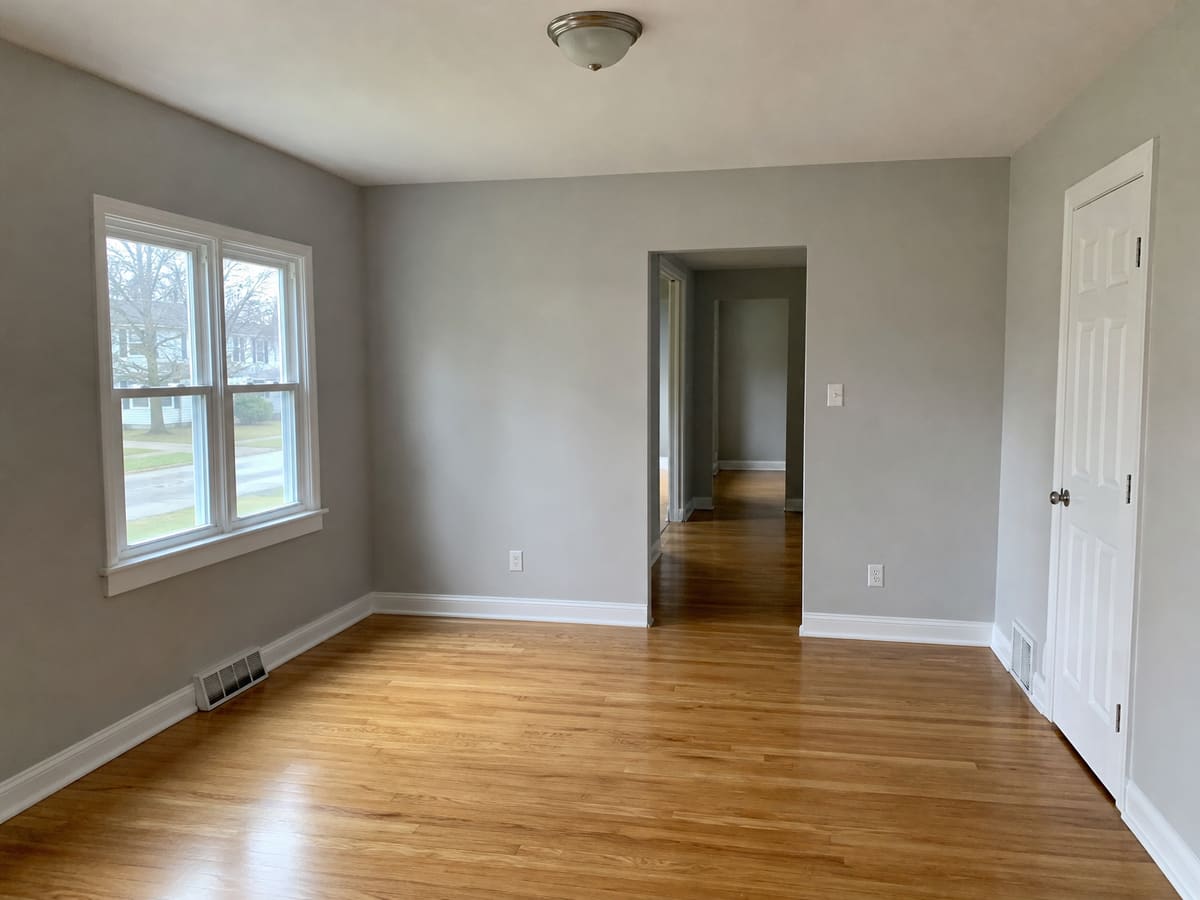
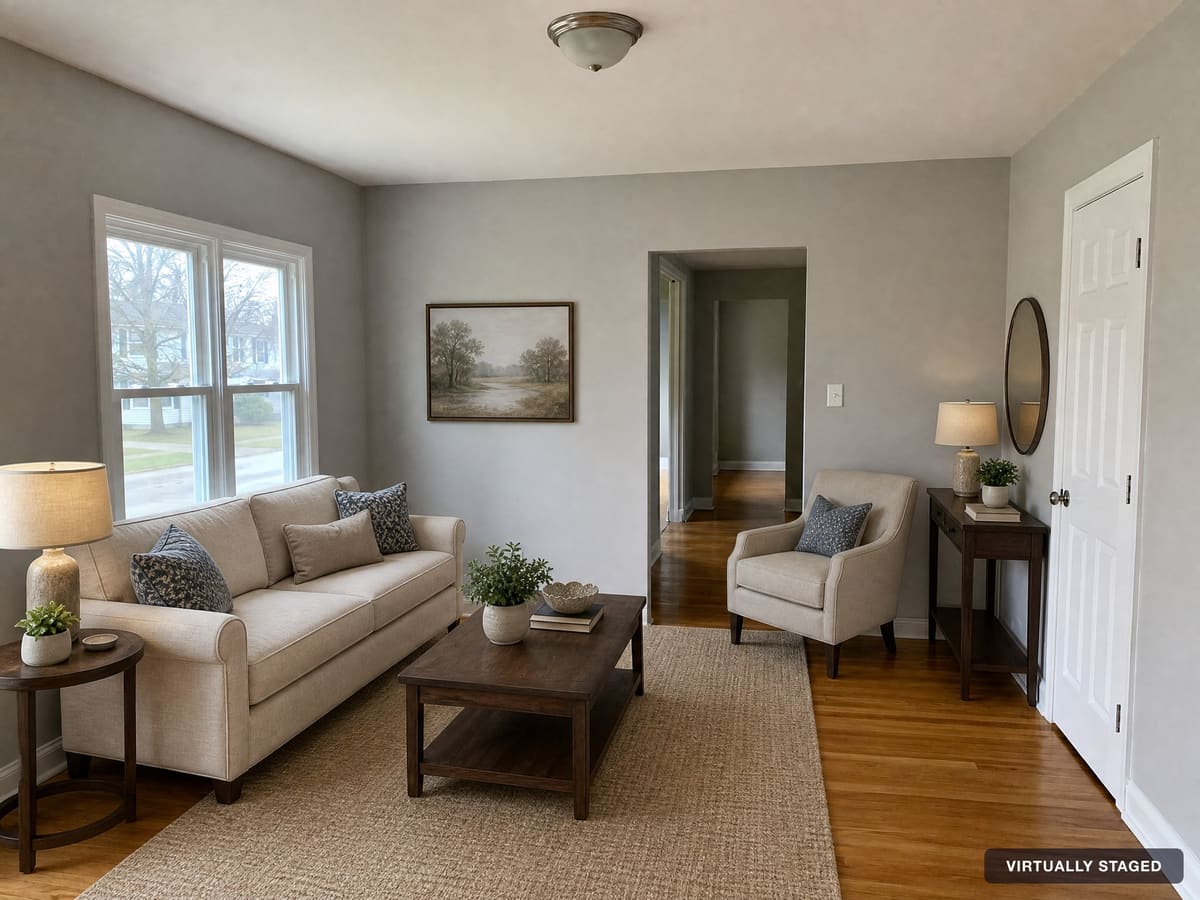 BeforeVirtually staged
The same room before and after virtual staging. The walls, floor, window and doors are unchanged; only furniture and decor were added. Drag to compare.
What Does “Virtually Staged” Mean?
A virtually staged photo shows a room furnished and decorated with items that were added digitally. It’s the online version of traditional home staging, where real furniture is rented and set up to help a home show well.
For buyers, the label is a heads-up: the room is real, its size and layout are real, but the sofa, bed and artwork aren’t included and may not be there when you visit. For agents, it’s a fast, low-cost way to help buyers imagine living in a vacant or awkward space.
Done honestly, virtual staging only adds or removes personal property such as furniture, rugs, lamps and art. It never changes the property itself: walls, floors, windows, doors, fixtures and views stay exactly as they are.
How Does Virtual Staging Work?
There are two common approaches:
- Designer-edited virtual staging. You send a photo, and a designer places 3D furniture into it by hand, usually within a day or two, for about $20 to $50 per photo.
- AI virtual staging. You upload a photo, choose a room type and style, and AI furnishes it in seconds to minutes. With RoomVizzion it takes about 30 seconds, costs $0.37 to $0.48 a photo, and keeps the room’s walls, doors and windows exactly where they are.
Either way, you start with a well-lit photo of the room, ideally empty. If the room is furnished, many tools (including RoomVizzion’s Remove Furniture) can empty it digitally first. See real results on our virtual staging examples page.
Virtual Staging vs. Physical Staging
| Virtual staging | Physical staging | |
|---|---|---|
| What changes | Only the listing photos | The home itself, with rented furniture |
| Typical cost | Under $1 to about $50 per photo | Median $1,500 per home with a staging service (NAR, 2025) |
| Speed | Seconds to a couple of days | Depends on stager availability and delivery |
| Style options | Show several styles of the same room | One look per room |
| In-person showings | Rooms are empty when buyers visit | Buyers see the furnished home in person |
| Best for | Vacant homes, rentals, tight budgets, online-first marketing | High-value homes and listings with lots of in-person traffic |
Many agents use both: physical staging for key rooms in premium listings, and virtual staging everywhere else. For a detailed price comparison, see how much virtual staging costs.
Benefits of Virtual Staging
- It helps buyers picture the home. In NAR’s 2025 Profile of Home Staging, 83% of buyers’ agents said staging made it easier for a buyer to visualize the property as their future home.
- It costs a fraction of physical staging. With AI tools, the key rooms of a listing can be virtually staged for a few dollars, compared with a median of $1,500 for a professional staging service.
- It’s fast. Photos can be staged the same day they’re taken, so a listing can go live without waiting for a stager.
- It shows a room’s potential. An empty spare room can be shown as a home office, nursery or guest room, and in more than one style.
- It works for rentals and vacant homes. Properties where physical staging doesn’t make financial sense can still look furnished online.
Limitations to Keep in Mind
- Buyers will see empty rooms in person. Clear disclosure sets expectations so nobody feels misled at a showing.
- It can’t fix the home. Virtual staging must never hide defects or show improvements that don’t exist.
- Quality varies. Poorly scaled furniture or warped rooms look fake and can hurt a listing. Look for results that keep the room’s true proportions.
Virtual Staging Disclosure Rules
Disclosure rules are set by individual MLSs, brokerages and, increasingly, by law, so they vary by market. Most share the same principles:
- Label staged photos clearly. Some MLSs accept a note in the caption or remarks; others require the label on the image itself.
- Include the original photo. Several MLSs and laws require the unaltered “before” photo, or a link to it, alongside the staged version.
- Only add or remove personal property. Furniture, decor, rugs and art are fine; walls, floors, doors, windows, fixtures and views must not be changed.
- Never hide defects or show features, finishes or improvements that don’t exist.
A few examples of how rules are written:
- NorthstarMLS (Minnesota) guidelines say staged and AI-enhanced photos should be labeled, each staged room should include an unaltered “before” image, and virtual staging is permitted only to add or remove personal property such as furniture and décor.
- Canopy MLS (the Carolinas) rules call for a clear disclosure directly on the image, not only in captions or remarks, with the original photo immediately before or after it.
- California’s AB 723, in effect since January 1, 2026, requires brokers and agents to conspicuously disclose digitally altered listing images and include the unaltered image or a link to it.
- In Ontario, the Real Estate Council of Ontario (RECO) says advertising “must never be false, misleading, or deceptive,” and that consumers must be able to clearly identify when images have been virtually altered or AI-generated, typically through “a clear disclosure on the image itself or within the property listing.” TRREB’s CEO adds that virtual staging must maintain factual integrity: for example, don’t show lamps in a room without outlets unless you say so.
Elsewhere in Canada and around the world, rules are set by each real estate board and regulator, and they’re changing quickly: the Ontario Real Estate Association says organizations across Canada are actively updating their standards. Check your MLS rules and your brokerage’s policy before publishing virtually staged photos.
Common disclosure wording for listing remarks:
“This home has been virtually staged to illustrate its potential.”
RoomVizzion is built around these rules: it only adds furniture and decor, never moves walls, doors or windows, can put a “Virtually Staged” label directly on each photo, and keeps your original photo with every staged image in My Photos.
Virtual Staging FAQ
What is virtual staging?
Virtual staging is adding furniture and decor to a photo of an empty room digitally, so buyers and renters can picture how the space could look. Only the photo changes; nothing is brought into the home.
What does “virtually staged” mean on a listing?
It means the furniture and decor in that photo were added digitally and aren’t part of the property. The room itself, including its size, layout, windows and doors, should be shown as it really is.
Is virtual staging the same as digital staging?
Yes. Digital staging, virtual staging and virtual home staging all describe the same thing: furnishing a listing photo digitally rather than with real furniture.
Is virtual staging legal?
Yes, when it’s disclosed and doesn’t misrepresent the property. Many MLSs require staged photos to be labeled and the original photo to be included, and some places, such as California, now require it by law. Always check your local MLS rules and brokerage policy.
Is virtual staging better than real staging?
It depends on the listing. Virtual staging is far cheaper and faster and suits vacant homes, rentals and online-first marketing. Physical staging lets buyers experience a furnished home in person, which can matter more for high-value listings with many showings.
Sources
- NorthstarMLS, “Guidelines for Virtual Staging and AI-Enhanced Listing Photos” (July 10, 2026).
- Canopy MLS, “Digital Images, Virtual Staging and Unauthorized Use of Listing Content” (updated February 27, 2026).
- California Senate Judiciary Committee, analysis of AB 723 (Pellerin), Real estate: digitally altered images: disclosure (2025).
- CBC News, “Rising use of AI-staged real estate photos raises questions about misleading homebuyers” (October 19, 2026), including statements from RECO, TRREB and OREA.
- National Association of REALTORS®, 2025 Profile of Home Staging (May 6, 2025).
- This guide is general information, not legal advice. Rules change; confirm current requirements with your MLS and brokerage.